In the high-stakes world of manufacturing, injection molding stands as a cornerstone process, shaping everything from everyday household items to intricate automotive components. The efficiency and quality of this process hinge on the performance of the molds, where even minor flaws can lead to costly delays or defective products. One of the most exciting advancements in this field is the adoption of conformal cooling—a technique that’s transforming how molds are designed and manufactured. By integrating cooling channels that follow the mold’s complex contours, conformal cooling is setting new benchmarks for performance, speed, and sustainability. This blog dives into how conformal cooling is revolutionizing injection mold performance, offering a fresh perspective on its impact across industries.
The Heart of Injection Molding: Understanding Mold Performance
Injection molding involves injecting molten material, typically plastic, into a mold cavity where it cools and solidifies into the desired shape. The mold’s design and cooling system play a pivotal role in determining the cycle time, part quality, and overall efficiency of this process. Traditional cooling methods rely on straight-line cooling channels drilled into the mold, which are limited by the geometry they can cover. These channels often fail to reach critical areas, leading to uneven cooling, warping, or prolonged cycle times.
Uneven cooling can cause a cascade of issues: sink marks on the surface, internal stresses in the part, or inconsistent dimensions. For manufacturers, this translates to higher scrap rates, increased energy consumption, and the need for post-processing to correct defects. As industries demand lighter, more complex parts with tighter tolerances, the limitations of conventional cooling have become a bottleneck. This is where conformal cooling steps in, offering a solution that aligns with the precision and innovation required in modern manufacturing.
What Is Conformal Cooling?
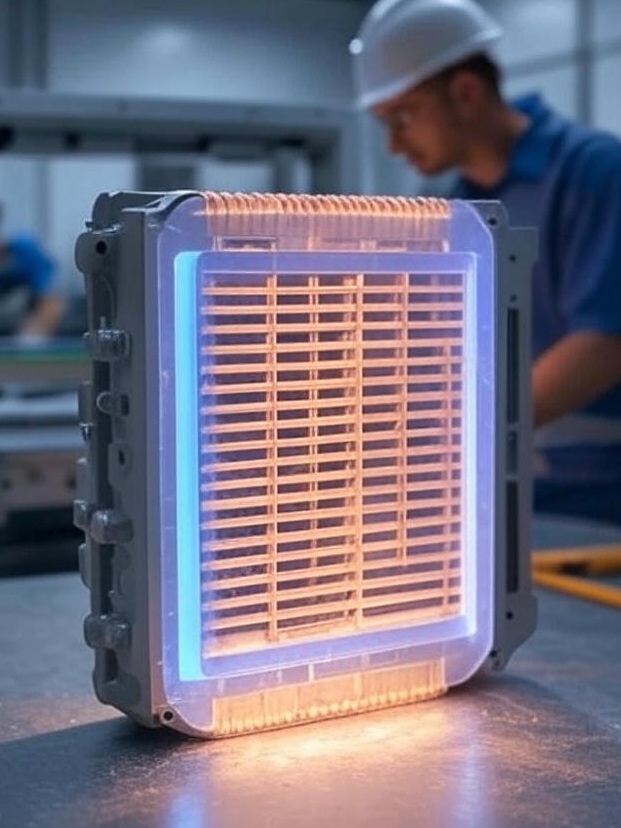
Conformal cooling refers to the use of cooling channels that conform to the shape of the mold cavity, rather than following straight paths. These channels are typically designed using advanced 3D modeling and manufactured with technologies like 5-axis CNC machining or additive manufacturing (3D printing). Unlike traditional straight channels, conformal channels can twist, turn, and follow the mold’s contours, ensuring uniform cooling across all surfaces.
The concept is simple yet powerful: by placing cooling channels closer to the mold’s surface and aligning them with its geometry, heat is dissipated more effectively. This reduces temperature gradients within the mold, leading to faster and more consistent cooling. The result is a leap forward in mold performance, impacting cycle times, part quality, and operational costs. Let’s explore the key ways conformal cooling is reshaping injection molding.
1. Accelerating Cycle Times for Greater Efficiency
One of the most immediate benefits of conformal cooling is its ability to slash cycle times, a critical metric in injection molding. Traditional cooling channels often require longer cooling phases because they can’t reach all areas of the mold efficiently, leaving hot spots that slow the process. Conformal cooling addresses this by distributing coolant closer to the cavity walls, enabling rapid and uniform heat removal.
For example, in a mold with deep recesses or complex curves, straight channels might leave the inner surfaces hotter for longer, extending the cooling phase by 20-30%. Conformal cooling channels, designed to follow these contours, can reduce cooling time by up to 50% in some cases. A manufacturer producing plastic containers switched to conformal cooling and cut cycle times from 45 seconds to 25 seconds per part, boosting output by nearly 80% without additional machinery. This efficiency not only increases production capacity but also lowers energy costs, making it a win for both profitability and sustainability.
2. Enhancing Part Quality with Uniform Cooling
Part quality is the lifeblood of injection molding, and uneven cooling is a common culprit behind defects. Sink marks, warping, and dimensional inaccuracies often arise when certain areas of the mold cool faster than others, creating internal stresses. Conformal cooling mitigates these issues by ensuring a consistent temperature across the mold, resulting in parts that meet exact specifications.
Consider a mold for an automotive dashboard, where a smooth, defect-free surface is essential. Traditional cooling might leave the edges cooler than the center, causing sink marks that require costly finishing. With conformal cooling, channels are strategically placed to match the dashboard’s contours, eliminating temperature disparities. A leading automotive supplier reported a 40% reduction in defect rates after adopting conformal cooling, improving both product reliability and customer satisfaction.
This uniformity also enhances the mechanical properties of the molded parts. By reducing internal stresses, conformal cooling produces components with greater strength and durability, which is critical for applications like medical devices or aerospace parts where safety is paramount.
3. Reducing Energy Consumption and Costs
Energy efficiency is a growing priority in manufacturing, and conformal cooling contributes significantly to this goal. Traditional cooling systems often rely on extended cycle times and higher coolant flow rates to compensate for inefficient heat removal, driving up energy use. Conformal cooling optimizes the process by delivering targeted cooling, reducing the need for excessive energy input.
In a study by a mold maker for consumer electronics, the switch to conformal cooling reduced energy consumption by 15% per cycle. The shorter cooling times and lower coolant volumes meant less strain on pumps and chillers, translating to substantial savings over time. For large-scale production runs, these reductions can amount to thousands of dollars annually, while also aligning with environmental regulations and corporate sustainability goals.
4. Enabling Complex Geometries with Advanced Manufacturing
The rise of complex part designs—driven by industries like electronics, healthcare, and automotive—has pushed mold makers to rethink their approaches. Conformal cooling thrives in this environment, thanks to its compatibility with advanced manufacturing techniques like additive manufacturing and 5-axis CNC machining. These technologies allow for the creation of intricate cooling channels that would be impossible with conventional drilling.
For instance, a mold with a convoluted internal structure, such as one for a multi-cavity medical syringe, benefits from conformal cooling channels that weave through the design. Additive manufacturing can print these channels directly into the mold, while 5-axis CNC can carve them with precision. A medical device manufacturer used this approach to produce molds for intricate surgical tools, reducing cycle times by 35% and achieving tolerances within ±0.01 mm—far beyond the capabilities of straight-channel designs.
This ability to handle complex geometries opens new design possibilities, allowing engineers to create parts with thinner walls, tighter tolerances, and unique shapes without compromising performance. It’s a testament to how conformal cooling is pushing the boundaries of what injection molding can achieve.
5. Extending Mold Lifespan Through Reduced Wear
Molds are significant investments, and their longevity directly impacts a manufacturer’s bottom line. Uneven cooling can lead to thermal fatigue, where repeated heating and cooling cycles cause cracks or deformations in the mold. Conformal cooling reduces this risk by maintaining a more uniform temperature, minimizing thermal stress and extending mold life.
In a practical example, a mold maker for plastic packaging noticed that molds with traditional cooling channels required replacement after 500,000 cycles due to fatigue cracks. After switching to conformal cooling, the same molds lasted over 750,000 cycles—a 50% increase in lifespan. This durability lowers maintenance costs and reduces downtime, providing a compelling return on investment for manufacturers.
6. Supporting Sustainability in Manufacturing
Sustainability is no longer optional in modern manufacturing, and conformal cooling aligns with this trend by reducing waste and energy use. Shorter cycle times mean less material is wasted due to defects, while optimized cooling reduces the environmental footprint of the process. Additionally, the longer mold lifespan decreases the need for frequent replacements, further conserving resources.
A packaging company that adopted conformal cooling reported a 25% reduction in plastic waste, as fewer parts were scrapped due to warping or sink marks. This not only cut costs but also enhanced the company’s green credentials, appealing to eco-conscious consumers and regulators. As pressure mounts to meet carbon-neutral goals, conformal cooling offers a practical path forward for sustainable production.
Real-World Transformations
The impact of conformal cooling is already making waves across industries. In the automotive sector, a manufacturer of interior trim panels used conformal cooling to reduce cycle times by 40%, enabling just-in-time delivery to assembly lines. In healthcare, a producer of disposable syringes implemented conformal cooling to achieve consistent wall thicknesses, meeting stringent regulatory standards while boosting output by 30%.
A standout case comes from the consumer electronics industry, where a company crafting smartphone cases adopted conformal cooling for its molds. The result was a 50% reduction in cycle time, a 20% drop in energy use, and a defect rate slashed from 5% to under 1%. These improvements allowed the company to scale production to meet holiday demand without additional investment, showcasing the technology’s transformative potential.
Challenges and Considerations
While conformal cooling offers numerous benefits, its adoption comes with challenges. The initial cost of designing and manufacturing molds with conformal channels can be higher, particularly when using additive manufacturing or advanced CNC techniques. The process also requires skilled engineers to optimize channel layouts, adding to the upfront investment.
Material compatibility is another factor. Some mold materials may not withstand the thermal dynamics of conformal cooling, necessitating careful selection and testing. Additionally, retrofitting existing molds with conformal channels can be complex, often requiring new molds to fully realize the benefits.
Despite these hurdles, the long-term gains—faster cycles, better quality, and lower costs—make conformal cooling a worthwhile endeavor. Advances in simulation software and manufacturing technologies are also reducing these barriers, making the technique more accessible to smaller manufacturers.
The Future of Conformal Cooling
The future of conformal cooling is bright, with emerging technologies poised to amplify its impact. Integration with Industry 4.0 concepts, such as IoT and digital twins, will enable real-time monitoring of cooling performance, allowing for dynamic adjustments during production. AI-driven design tools will optimize channel layouts with greater precision, further enhancing efficiency.
Hybrid manufacturing, combining additive and subtractive processes, will streamline the creation of conformal cooling channels, reducing lead times and costs. As materials science advances, new mold alloys tailored for conformal cooling will emerge, expanding its applicability. These innovations promise to make conformal cooling a standard practice in injection molding, driving the industry toward greater performance and sustainability.
Conclusion: A New Era for Injection Molding
Conformal cooling is revolutionizing injection mold performance by accelerating cycle times, enhancing part quality, reducing costs, and supporting sustainable practices. Its ability to adapt to complex geometries and extend mold life positions it as a cornerstone of modern manufacturing. From automotive to healthcare, conformal cooling is enabling producers to meet the demands of a fast-evolving market with greater efficiency and innovation.
For manufacturers looking to stay competitive, conformal cooling isn’t just an upgrade—it’s a strategic imperative. As the technology continues to evolve, it will shape the future of injection molding, delivering parts that are faster, better, and greener. Are you ready to embrace the conformal cooling revolution and elevate your mold performance to new heights?